

Everybody’s scared right now. Turn on the news and it’s wall-to-wall doom: geopolitical tensions, tariff threats, war in the Middle East, and tech stocks cratering like it’s 2008 all over again. I get it. When the red on your screen starts piling up, every instinct screams get out.
But here’s what I’ve learned in over two decades of professional trading — the moments that feel the worst are almost always the moments that matter the most. The traders who build generational wealth aren’t the ones reacting to fear. They’re the ones who planned for it months ago and are now executing while everyone else freezes.
That’s the difference between an elite trader and everyone else. We don’t react. We position.
And right now, across every major asset class, that positioning is well underway.
The Midterm Cycle: A 30-Year Blueprint That Nobody Talks About
If you’ve followed my work, you know I’m obsessed with cyclical data — specifically, the midterm election cycle and its impact on the S&P 500. I published a deep-dive on this 30-year pattern that remains one of the most important pieces of research I’ve put out.
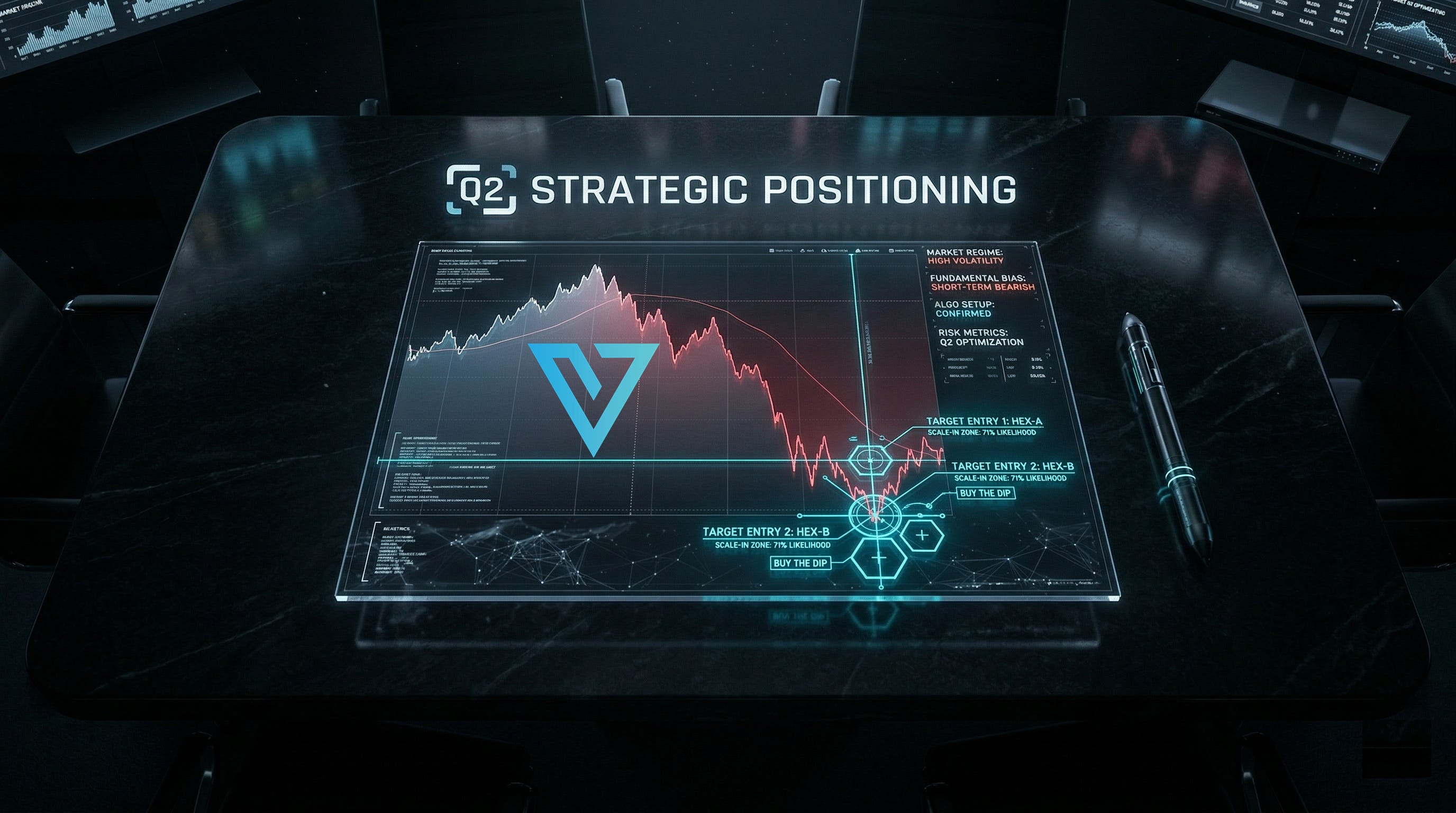
Here’s the headline number: historically, in midterm cycle years, the S&P 500 pulls back roughly 18% — and it happens with about a 70% probability. This isn’t some obscure anomaly. This is three decades of data screaming the same message over and over again.
Now here’s where it gets interesting for 2026. We’ve already pulled back approximately 7% from the highs. That means we’re roughly halfway to the historical average drawdown. If the pattern holds — and it has held with remarkable consistency — there’s likely more downside ahead before this cycle completes.
But here’s the part that makes professional traders lean forward in their chairs: by the time these midterm cycle pullbacks resolve, the S&P 500 historically finishes the year approximately 1.7% positive. Read that again. We get a gut-wrenching sell-off that shakes out every weak hand in the market, and then it recovers to finish essentially flat on the year.
What does that tell you? It tells you this sell-off, when it completes, creates one of the best buying opportunities of the entire four-year cycle. And elite traders know this. They aren’t worried about if it’s coming — they’re focused on where they want to buy.
For me, that level on the S&P 500 is around 5,500–6,000 on SPX. That’s the zone I’m watching. And I’m not going all-in at one price. I’m scaling into the position, building it methodically as price moves into my target area.
This is what separates professionals from the crowd. We don’t get swept up in headlines about wars and geopolitical crises. Those events get blamed for the sell-off, but the truth is this pullback is cyclical. It’s been happening like clockwork for thirty years, and it has nothing to do with who’s in office or what’s happening overseas. Traders who conflate fear-driven headlines with structural market behavior are the ones who get left behind.
The 30-Year Market Pattern Nobody Wants to Talk About Right Now

If you’ve been trading long enough, you develop a healthy respect for patterns. Not because the market is scripted — it’s not — but because human behavior tends to repeat, especially when the same catalysts show up on a predictable schedule.
Metals: The Contrarian Hedge Everyone Needs
While equities pull back, another trade is setting up beautifully — and it’s one that most retail traders are completely ignoring.
Gold has had a monster rally, pushing up to historic levels before pulling back. Silver followed suit. And here’s my conviction: metals are not done going higher long term. The recent pullback isn’t a signal to run — it’s an invitation to get positioned.
I’m watching gold around the $4,000 level and silver near $50 as areas where I want to be a buyer. These aren’t speculative moonshot entries. These are strategic long-term positions that serve as a contrarian hedge against everything else in your portfolio.
Why? Because we know two things with near certainty: inflation is going to continue, and the devaluation of the dollar will continue. Those two forces alone create a long-term tailwind for precious metals that isn’t going away anytime soon. Having a meaningful allocation to gold and silver isn’t just smart — it’s essential for anyone serious about building a diversified portfolio.
Copper: The AI Play Nobody Sees Coming
Now here’s one that might surprise you — and it’s a position I’m actively preparing to take.
Copper is a pseudo-AI play, and almost nobody is talking about it. I published a full breakdown on the copper-AI connection that lays out the thesis in detail, but here’s the short version: the AI revolution requires massive physical infrastructure. Data centers, power grids, transmission lines — all of it requires enormous amounts of copper.
As AI expansion accelerates and the demand for new data centers and power infrastructure explodes, copper demand is going to surge. This isn’t a trade that plays out next week. This is a one-to-three year hold, potentially even five to ten years, depending on how long the AI buildout lasts. I’m watching for a pullback on copper, and when it comes, I’ll be a buyer.
Everyone is chasing NVIDIA and the semiconductor names. The smart money is looking at the raw materials that make the AI revolution physically possible.

The Magnificent Seven Reality Check
Speaking of tech — let’s talk about what’s happening with the Magnificent Seven and the broader tech sell-off. It’s been, frankly, stunning. But when you strip away the emotion and look at it objectively, this is exactly what needed to happen.
Valuations had gotten completely disconnected from reality. The AI narrative pushed P/E ratios into the stratosphere, and what we’re seeing now is a P/E compression — a return to earth. That doesn’t mean these companies aren’t valuable. Many of them absolutely are. It just means the market got ahead of itself, and price needs to come back in line with fundamentals.
For elite traders, this creates opportunity. You don’t throw the baby out with the bathwater. You wait for price to come to your levels, and you buy quality names at a discount.
Oil: The One I’m Sitting Out — For Now
I’d be remiss not to mention energy. Oil has caught a bid with the ongoing conflict in the Middle East, and it’s the one market right now getting all the attention because it hits consumers directly at the pump. But here’s my honest take: oil is too high for me to deploy capital right now.
Looking back over the previous four years, oil has been range-bound. It traded in a box for three years and nobody said a word. Now that it’s pushing the upper end of that range on geopolitical risk, I’m not chasing it. I’ll wait for a pullback to fair value. There will be an opportunity — there always is.

The Prop Account Edge: Playing Offense With Other People’s Money
Here’s a dimension that most people outside of professional trading circles don’t consider. While my long-term capital is deployed into positions like the ones I just outlined — metals, equities on the dip, copper — my day-to-day income comes from a completely different source.
I trade prop accounts. I use other people’s capital to capture short-term volatility and generate daily income, while my personal funds stay invested in long-term positions and continue to grow with the macro environment.
This is a game-changer that didn’t exist for previous generations of traders. If you didn’t have capital, you simply couldn’t trade. Now, whether it’s futures, CFDs, or equities, there are prop firms that allow skilled traders to access funded accounts and profit from intraday volatility — without risking their own long-term portfolio.
This is the dual-engine approach: long-term wealth building with your own capital, and short-term income generation with funded accounts. If you’re not taking advantage of both engines in 2026, you’re leaving money on the table.
CLICK HERE FOR A LINK OF MY PREFERED PARTNERS
The Takeaway: Be the Planner, Not the Reactor
If there’s one thing I want you to walk away with, it’s this: elite traders have a plan before the move happens. They know their levels. They know their asset allocation. They know how they’re going to scale in. And they know that fear-driven headlines are noise — not signal.
The markets are working exactly the way they’re supposed to. We pushed too far out of value across nearly every asset class, and now price is correcting. That’s not a crisis. That’s efficiency. And it’s creating an opportunity that skilled, prepared traders will capitalize on for years to come.
So build your plan. Identify your levels. Start scaling in. And remember — don’t bet against America. The macro trend is up. It’s always been up. The dips are where fortunes are made.
Until next time—trade smart, stay prepared, and together we will conquer these markets!
Ryan Bailey, VICI Trading Solutions.