


Hello Team,
Something unusual is happening in the S&P 500 right now — and most traders haven’t adjusted for it.
For years, you could treat “the index” and “the market” as basically the same thing.
If SPX was up, breadth was usually decent.
If SPX was down, participation was usually weak.
Not anymore.
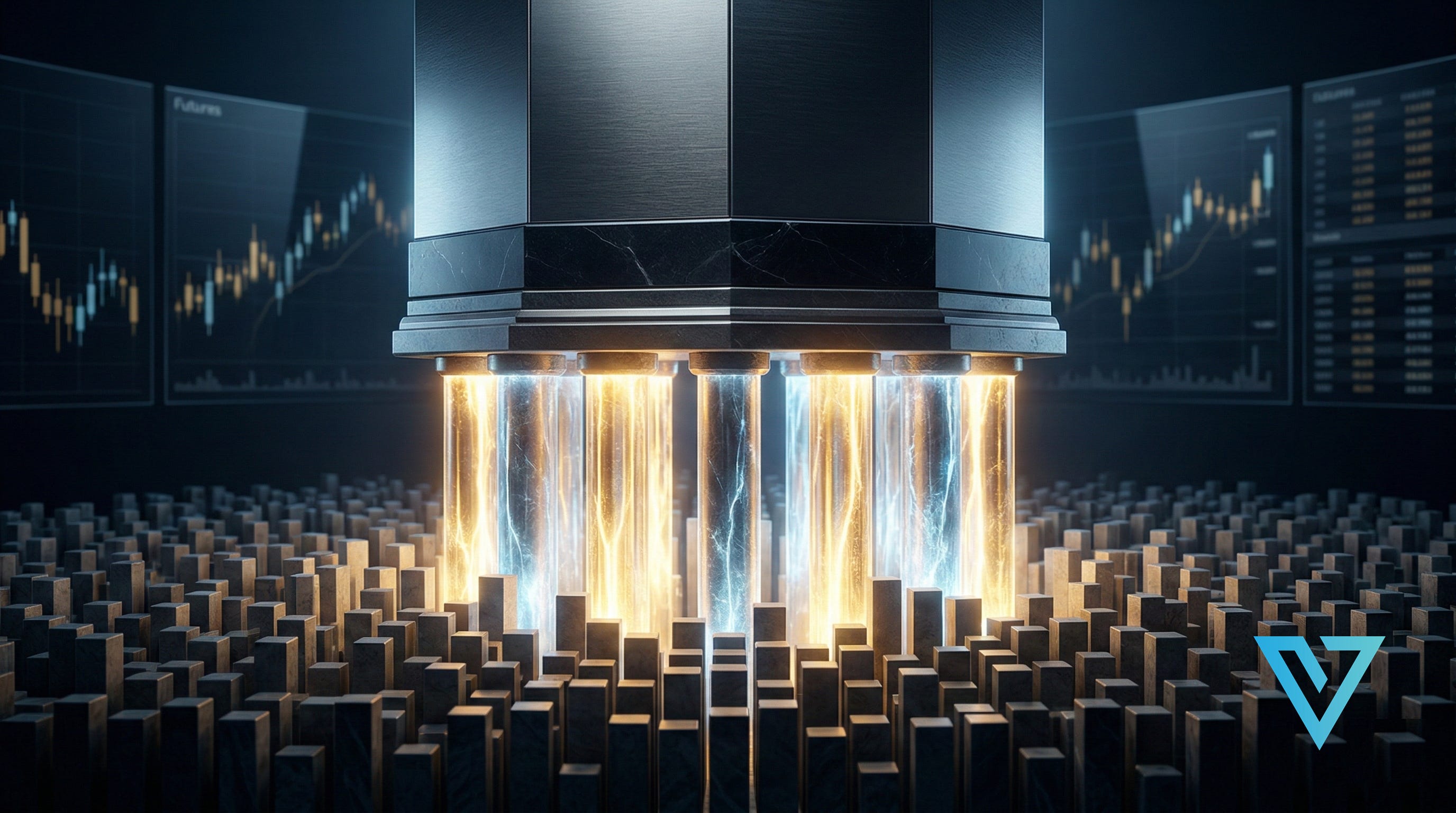
The S&P 500 is undergoing a structural shift where concentration at the top is reshaping how the index behaves on a daily basis. And if you’re trading the S&P 500 without adjusting for this, you’re reading the tape through an old lens.
Let me show you why — and what to do about it.
The Numbers Don’t Lie
Here are the key facts:
• The top 10 stocks now account for roughly 40% of the S&P 500’s total market cap. That is the highest concentration in the index’s modern history — surpassing even the dot-com bubble peak of ~27%.
• Nvidia alone has carried over 7% of the index weight during recent stretches. One company. Seven percent of a 500-stock index. That means a 3% move in Nvidia has the same index impact as a 0.04% move across all 500 names equally.
• The equal-weighted S&P 500 (RSP) is diverging from the cap-weighted S&P 500 (SPY) more frequently. We’re seeing sessions where cap-weighted SPX closes red while the average stock underneath is flat or even green.
• On February 13, 2026, Nvidia dropped 2.2% and single-handedly dragged the cap-weighted index into the red — while the equal-weighted index actually finished slightly positive. One stock overpowered the combined gains of over 200 other companies.
That is not random noise. That is market structure.
What Changed?
The S&P 500 has always had big names at the top. So why is this different?
The magnitude is historically unprecedented.
At the peak of the dot-com bubble in 2000, the top 10 names held about 27% of the index. Today it’s roughly 40%. We are in uncharted territory for concentration — and the passive flow mechanics underneath are reinforcing it, not correcting it.
Passive indexing creates a self-reinforcing feedback loop.
More capital than ever tracks cap-weighted indexes. That means every dollar flowing into SPY or VOO automatically buys more of the largest names. As those names grow, they get a bigger weight, which means the next dollar buys even more of them. This feedback loop works in both directions: it pushes leaders higher in momentum phases and accelerates downside pressure when those leaders stall.
A single sector — AI/tech — is driving the concentration.
This isn’t like previous cycles where concentration was spread across different industries (oil in the ‘80s, financials in the ‘00s, tech in the ‘90s). Today’s concentration is heavily tilted toward one theme: artificial intelligence infrastructure. That makes the index more sensitive to AI-specific catalysts (chip export policy, capex guidance, hyperscaler spending signals) than broad economic data.
Why This Matters for ES/SPX Traders
If you trade the S&P futures or SPX options, this structural shift changes your daily read of the tape. Here’s how:
The headline number lies more often now.
In a concentrated index, a “red day” might just mean Nvidia or Apple had a bad session — not that the market is weak. And a “green day” might mean two mega-caps rallied while 400 stocks went nowhere. If you’re making directional bets based on SPX alone, you’re trading an increasingly distorted signal.
Breadth confirmation is no longer optional — it’s essential.
Before entering or holding a directional ES position, check what the average stock is doing. The simplest version: compare SPY to RSP (equal-weight). If they’re moving together, the signal is clean. If they’re diverging, the index is being driven by a handful of names and the move is more fragile than it looks.
Mean reversion gets more violent in concentrated regimes.
When a small group of stocks drives the index up on low volatility, the eventual reversal tends to be fast and sharp. That’s because the same passive mechanics that pushed leaders higher now accelerate the unwind. Slow grind up, elevator down. If you’re used to buying dips with wide stops in a broad market, this regime will eat your account.
Macro data hits unevenly — and the index shows only one story.
Rates, inflation, and policy headlines don’t hit all sectors the same way. In a concentrated index, a rate-sensitive mega-cap reaction can dominate the tape even when the rest of the market is doing something completely different. This creates more “head fakes” on data releases — especially in the first 30 minutes.
The Practical Framework
Here’s what I’m doing differently to adapt:
Trade levels, not headlines.
The first move after any data release can be wrong in this environment, especially when a handful of mega-caps are driving the entire reaction. Wait for structure to confirm before committing.
Watch cap-weight vs equal-weight divergence.
If SPX pops but RSP doesn’t follow, treat extension cautiously. If SPX is flat/red but internals are firming, don’t press downside blindly. The divergence IS the information.
Track sector participation, not just direction.
A rally led by 7 stocks feels the same on the chart as a rally led by 350 stocks — until it reverses. Check how many sectors are participating. Broad participation = durable. Narrow leadership = fragile.
Don’t confuse “index fatigue” with “market collapse.”
A choppy, concentrated tape can feel broken intraday while still maintaining bullish intermediate structure. The index can go sideways for weeks while the average stock is trending. Separate the noise from the signal.
Respect that this regime changes sizing math.
In a market where single-stock events can gap the index, position sizing matters more than conviction. Size smaller. Take profits faster. Respect both directions. The asymmetry of this tape rewards disciplined operators and punishes anyone over-leveraged into one narrative.
Trader Checklist
✅ Is the cap-weighted move being confirmed by equal-weight participation?
✅ How many sectors are green vs red — is this broad or narrow?
✅ Are mega-cap earnings/news driving index direction, or is it organic?
✅ Is volatility expanding directionally, or just mean-reverting?
✅ Am I sized appropriately for a tape where one stock can move the index 0.5%?
The Bottom Line
The S&P 500 hasn’t just moved. It has changed.
This is the central structural story of 2026: an index can look dramatic while the underlying market tells a completely different story.
That means old shortcuts stop working.
If your process is headline first, emotion second, execution third — you will get trapped in this tape.
If your process is structure first, confirmation second, execution third — you will find the edge that most traders are missing.
The concentration isn’t going away tomorrow. Passive flows will continue to reinforce it. AI capex will continue to drive it. And the divergence between “what the index says” and “what the market is actually doing” will continue to widen.
The traders who recognize this shift and adapt their process will have a structural advantage for the rest of the year.
Use the data. Respect the structure. Let price confirm the story.
Until next time—trade smart, stay prepared, and together we will conquer these markets.
Ryan Bailey
VICI Trading Solutions
(Not index related) I think the mag7 is reaching its ceiling. Small caps are trending up, as you mentioned, while mag7 is stagnating. It’s super risky to invest into mag7 now. My personal portfolio is flourishing for the last half a year, most likely due to mag7 stopped sucking in capital
3% move in Nvidia has the same index impact as a 0.04% move across all 500 names equally.
Actually 0.21% 👌