

Hello Team,
There are times the market doesn’t turn bearish… it just quietly changes the rules.
We’re in one of those moments.
Not because of one headline.
Not because of one candle.
Because two different markets are pricing the same assumption:
The assumption is: “Nothing goes wrong.”
And when that’s the assumption, the risk isn’t that you’re wrong today.
The risk is that you’re trading a high-risk / low-reward regime where surprises get amplified.
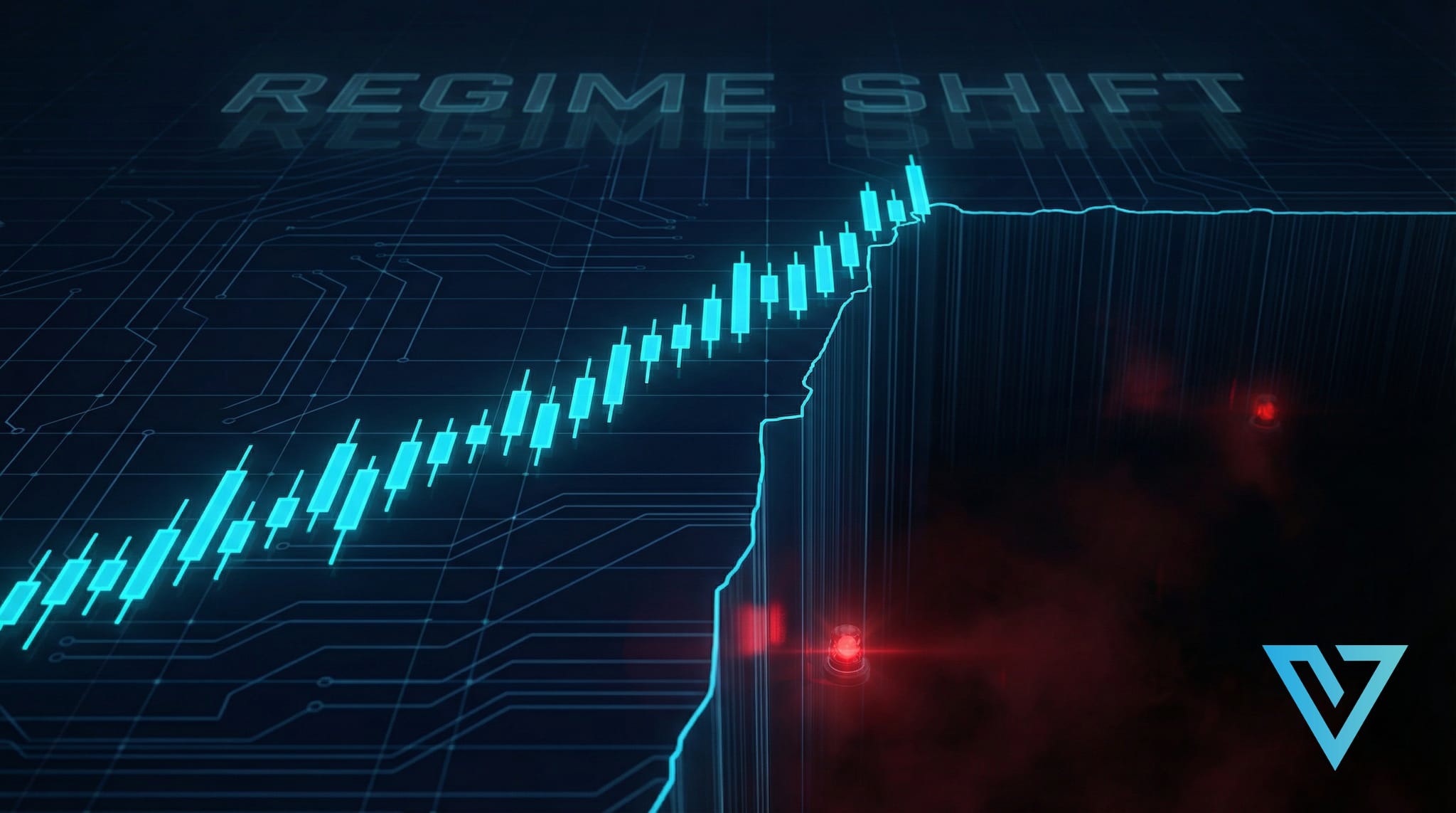
The Regime Shift: From “Risk is Paid” to “Risk is Ignored”
Here Are The Two Tells.
1) Credit spreads are pinned near the floor
Investment-grade corporate spreads (IG OAS) have been hovering around ~0.73%–0.78% and as of Feb 12, 2026 printed 0.78% (FRED).
That’s the bond market basically saying:
“We’ll lend for almost no extra compensation. We don’t need a fear premium.”
That’s where the asymmetry comes in:
Spreads don’t have infinite room to tighten
But they can widen fast when the story cracks
When spreads widen, it doesn’t stay “a bond thing.”
It bleeds into equities through borrowing costs → margins → buybacks → multiples.
2) Valuations are in rare air
Shiller CAPE is around ~40.
Multpl shows:
• Jan 2026: 40.18
• Feb 2026: 40.00
CAPE is not a tool for timing next week.
But it is a clean “risk regime” gauge.
At these levels, your margin of safety is thin — and the left tail matters.

Why It Matters That BOTH Are Extreme
Stocks can stay expensive.
Credit can stay tight.
But when both markets are simultaneously saying:
• “Risk is low.” (spreads)
• “Pay up for growth.” (CAPE)
…that’s when the market becomes fragile.
Fragile doesn’t mean crash.
Fragile means the reaction function changes.
Slow rallies can keep grinding.
But breaks tend to show up as gaps and air pockets.
What Changes for S&P 500 Traders? (Actual Playbook Changes)
This is the part that matters.
1) “Dip buys” become more conditional
In a perfection-priced regime, bounces can still happen — but you can’t treat every bounce as “safety returned.”
Trade the level. Take the money. Stay liquid.
2) Down moves get faster
These are the environments that drift higher on suppressed vol… then drop hard when something hits.
Slow stairs up. Elevator down.
3) Rates + credit headlines matter more than usual
As of Feb 12, 2026:
• 10Y yield: 4.09% (FRED)
• 2Y yield: 3.47% (FRED)
If yields push higher AND credit stops behaving, S&P 500 usually feels it quickly.
4) Crowding creates air pockets
When everyone believes the same “durability” narrative, price can float… until it doesn’t.

What I’m Watching (Simple Checklist)
IG spreads (OAS): staying pinned or starting to lift? (Investment Grade (IG) Option-Adjusted Spread (OAS))
10Y yield: trending higher = multiple compression pressure
Earnings reactions: are beats rewarded, or sold?
Volatility behavior: does VIX start holding higher lows?
Breadth: broad participation or narrow carry job?
Bottom line
This isn’t me calling a top.
This is me saying: the market is priced for perfection.
And perfection pricing is a different regime.
In this regime the edge is smaller and the penalty is bigger — so the playbook adjusts:
size down a notch
take profits faster
respect both directions
let levels (not narratives) do the talking
Know the game. Trade the levels. Let the data guide you.
Until next time—trade smart, stay prepared, and together we will conquer these markets.
Ryan Bailey
VICI Trading Solutions